
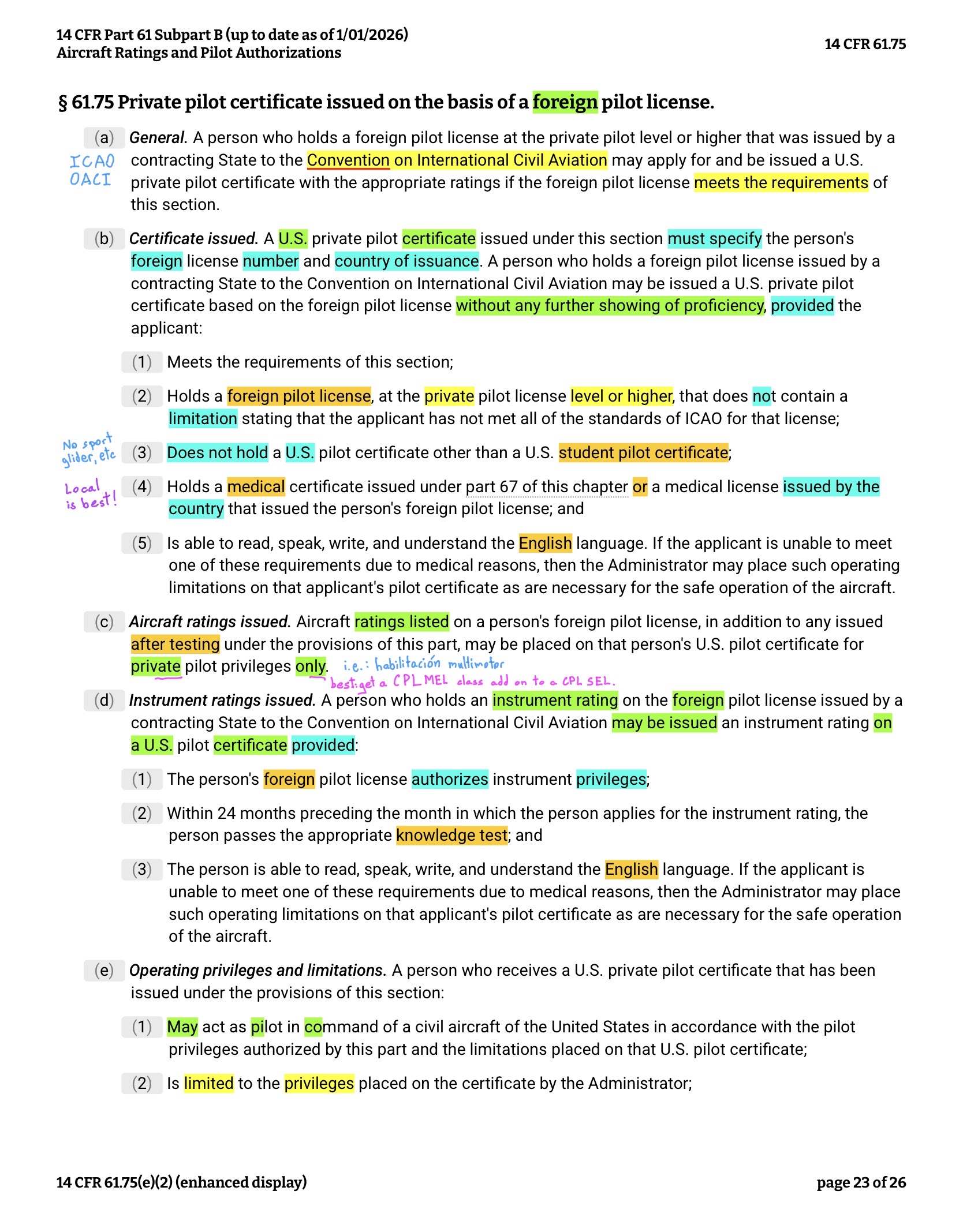
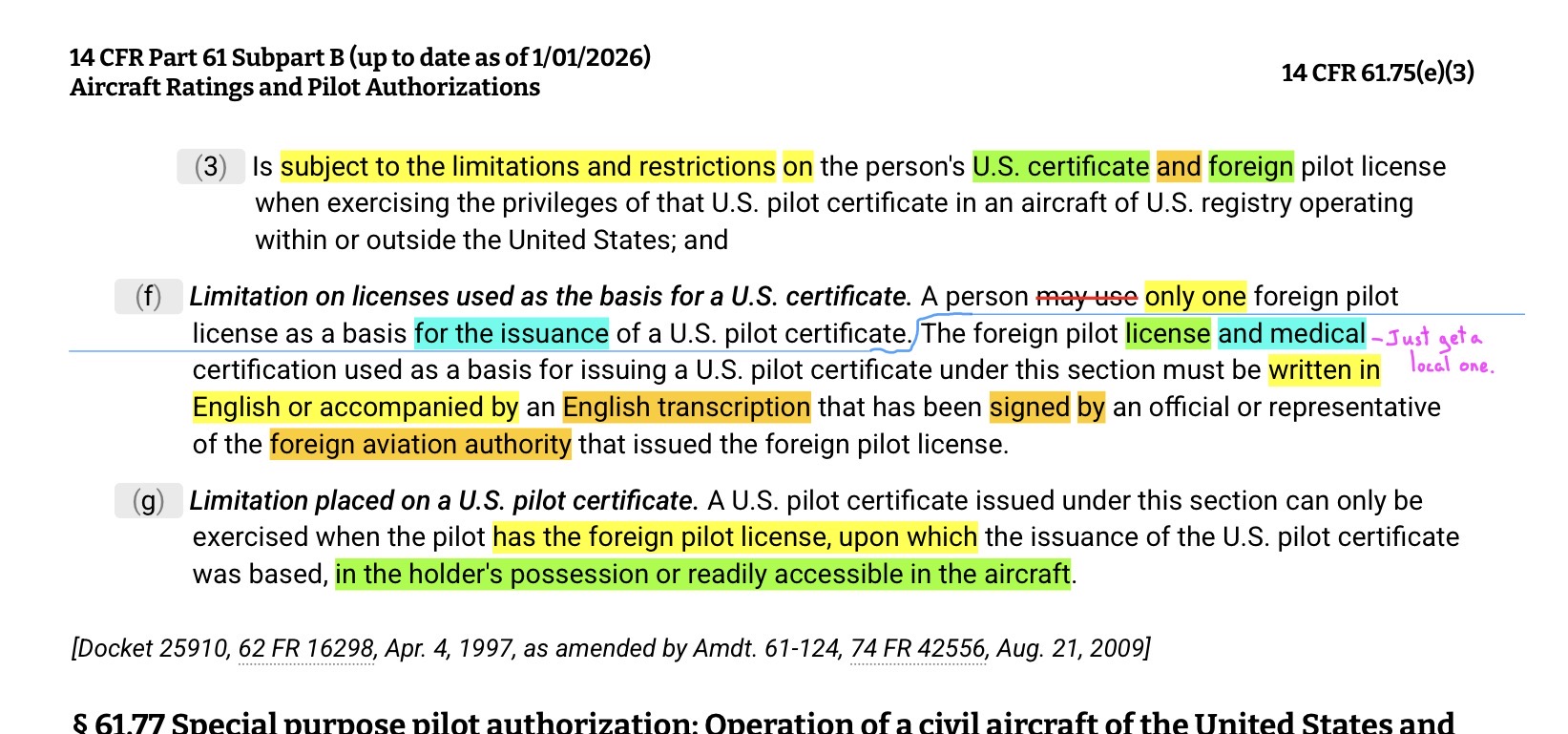
Under FAR § 61.75(d), pilots converting a foreign PPL can convert their Instrument Rating (IR) seamlessly at the same time by including their IR written exam results.
Missing this fine print forces pilots into unnecessary, stressful, and costly IR check-ride(s) just to regain an instrument rating they already hold.
The adjacent images show how I read FAR § 61.75.
Missing this fine print forces pilots into unnecessary, stressful, and costly IR check-ride(s) just to regain an instrument rating they already hold.
The adjacent images show how I read FAR § 61.75.


clic / tap on the images above to expand
The Safe & Efficient Path
I ensure your paperwork is flawless from day one. To guarantee your safety and confidence in new airspace, we train to the standards of a thorough Flight Review (BFR) and an Instrument Proficiency Check (IPC), covering the items recommended by AC 61-98E. I make sure you reach those standards because your safety and peace of mind is my absolute priority.
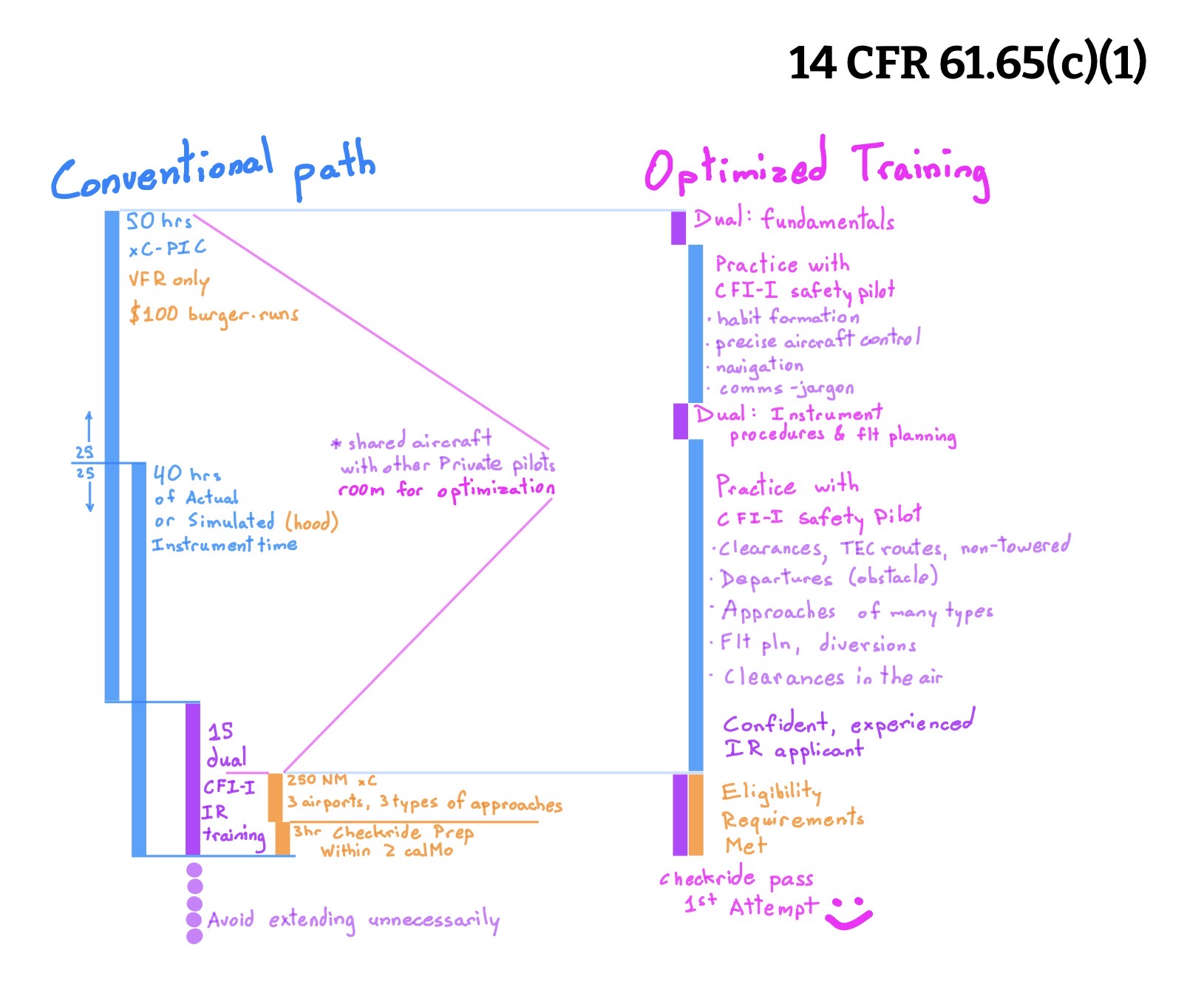
The FAA requires only 15 hours of dual instruction with a CFI-I to qualify for the Instrument check-ride, yet the national average is around 50 hours. Why the massive gap?
Most schools and instructors misinterpret FAR § 61.65(d). They let students fly their required 50 hours of xC-PIC time as VFR “$100 hamburger runs” before starting any IR training.
While those flights are fun, many pilots end up repeating the same routes, wondering where to fly next. This doesn’t just waste valuable hours –it allows bad habits to lock in those early hours, which later require costly dual instruction to break.
– The First ~3 hours, dual : we master the absolute fundamentals of instrument flight to ensure precise, comfortable aircraft control.
– The Time-Building phase : Immediately after, I join you as your Safety Pilot (available at a reduced package rate) to ensure those core fundamentals stick and no bad habits form.
During Time Building we actively correlate your VFR and IFR knowledge and skills. Under the hood, we cover en-route navigation entirely, master cockpit management, tackle new IFR radio jargon.
After a few more hours of targeted instruction (dual), we use the xC-PIC time to practice instrument departures and approaches until they’re second nature. As your confidence grows, we will file IFR flight plans, practice divertions, and copy new clearances in the air.
That is exactly how the regulations intended those 40 hrs of hood time to be spent.
This process maximizes your investment and ensures your IR certificate represents genuine confidence in your real-world decision-making.
Most schools and instructors misinterpret FAR § 61.65(d). They let students fly their required 50 hours of xC-PIC time as VFR “$100 hamburger runs” before starting any IR training.
While those flights are fun, many pilots end up repeating the same routes, wondering where to fly next. This doesn’t just waste valuable hours –it allows bad habits to lock in those early hours, which later require costly dual instruction to break.
The Combined Syllabus Solution
In my base IR syllabus, we combine your 15 hours of Instrument Training (dual) time with your 50 hours of xC-PIC time, the greater part under the hood. We start on the right foot from flight number one:– The First ~3 hours, dual : we master the absolute fundamentals of instrument flight to ensure precise, comfortable aircraft control.
– The Time-Building phase : Immediately after, I join you as your Safety Pilot (available at a reduced package rate) to ensure those core fundamentals stick and no bad habits form.
During Time Building we actively correlate your VFR and IFR knowledge and skills. Under the hood, we cover en-route navigation entirely, master cockpit management, tackle new IFR radio jargon.
After a few more hours of targeted instruction (dual), we use the xC-PIC time to practice instrument departures and approaches until they’re second nature. As your confidence grows, we will file IFR flight plans, practice divertions, and copy new clearances in the air.
The Verdict: Better Training, Lower Costs
By merging time-building with active learning, your formal dual hours remain low because the bulk of your learning happens naturally during your xC-PIC time.That is exactly how the regulations intended those 40 hrs of hood time to be spent.
This process maximizes your investment and ensures your IR certificate represents genuine confidence in your real-world decision-making.
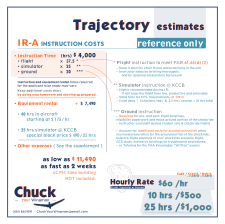
On the left, the conventional path assumes you started IR training after completing your time building along with a PPL safety pilot.
Timebuilding adds about 6k to the estimate for the conventional path.
Timebuilding adds about 6k to the estimate for the conventional path.
✗ 11.5k + 6k = 17.5k or more
✗ only to level up to the testing standards.
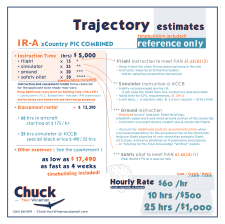
On the right, the Combined Syllabus estimate accounts for timebuilding : 50 hrs xC PIC and +40 hrs hood within the soft limit of 68 hrs aircraft rental, each of those hours with a competent CFII by your side.
All for less than what timebuilding adds to the estimate for the conventional path.
All for less than what timebuilding adds to the estimate for the conventional path.
✓ 17.5k is considered a soft ceiling.
✓ confidence in flying real world IFR, far beyond the testing standards.
✓ confidence in flying real world IFR, far beyond the testing standards.
Recommending this process to other CFI-I, and following it with my IR applicants is my way of giving back to the aviation community. By shaping better, more proficient Instrument Rated pilots today, we are building the next generation of exceptional CFI-Is for our country.


